

Safe Bed Rail Aids for Seniors to Get In and Out of Bed Easily
Getting out of bed should not feel like a risky task. For many older adults, the hardest part of the morning is not walking across the room. It is sitting up, turning, finding balance, and standing without slipping or pulling on unstable furniture.
A well-chosen bed rail aid can make that movement safer and more comfortable. It gives a steady place to hold, supports rolling and sitting up, and can reduce fear during nighttime bathroom trips. The right choice depends on the person, the bed, the room layout, and how much support is needed.
This guide explains the main rail aid options, how to choose one, and what safety details matter most.
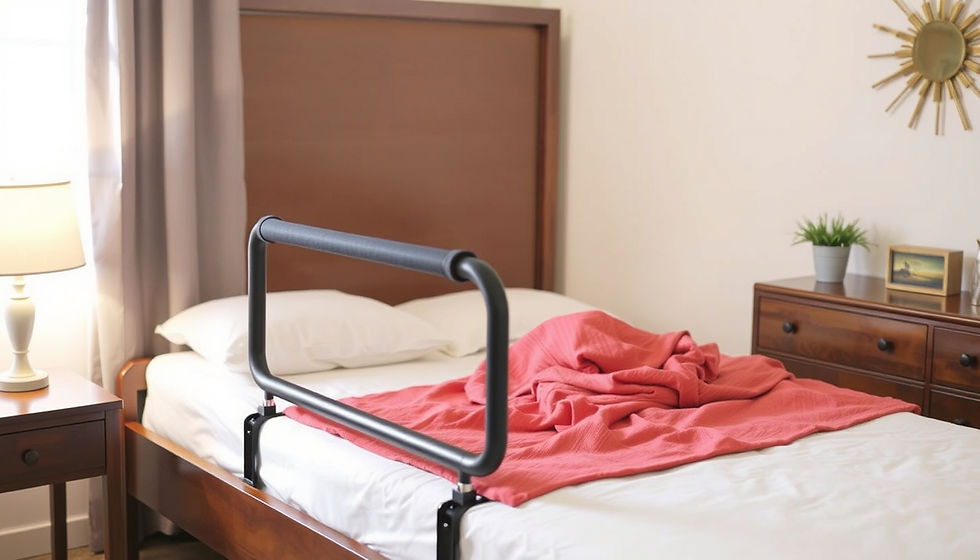
Why bed rail aids can help with daily safety
Bed mobility uses more strength than it may seem. To get out of bed, a person usually needs to:
Roll to one side
Push the upper body upright
Swing both legs over the edge
Sit and steady balance
Stand without sliding forward
Weakness, arthritis, dizziness, hip or knee pain, recent surgery, poor vision, or fear of falling can make each step harder. A rail aid gives the hands a reliable anchor point during the movement.
A good bed rail aid may help with:
Sitting up from lying down
Turning over in bed
Standing from the mattress edge
Lowering back onto the bed with control
Feeling safer during the night
These aids are not all the same. Some are small handles that slide under the mattress. Some attach to an adjustable bed frame. Some include legs that reach the floor. Others are longer rails designed to reduce rolling out of bed.
The goal is not to create a barrier. The goal is to provide safe support for movement.
Bed rails should support independence without creating a new hazard. Fit, placement, and daily use matter as much as the product itself.
This article is for general information only. For medical needs, fall risk concerns, or recovery after surgery, a physician, physical therapist, or occupational therapist can help choose the safest setup.
The main types of bed rail aids for seniors
The best rail depends on why support is needed. A person who only needs help sitting up may need a different product than someone who rolls too close to the edge at night.
Bed assist handles
A bed assist handle is usually a short rail placed near the side of the bed. It often slides between the mattress and box spring or attaches to the bed frame. Some models have a strap that secures the rail to the opposite side of the bed.
This option works well for people who can mostly move on their own but need a firm grip while sitting or standing.
Best for:
Getting from lying down to sitting
Standing from the mattress edge
Light to moderate balance support
Smaller bedrooms where space is limited
Look for a handle with a comfortable grip, a stable base, and a design that does not shift when pulled.
Floor-supported bed rails
A floor-supported rail has legs that rest on the floor. This can add stability, especially for taller mattresses or beds without a strong frame. Some models adjust in height, which can help match the rail to the mattress and the person’s reach.
This type may be useful when a senior needs more dependable support during standing.
Best for:
Higher beds
Softer mattresses
People who need stronger support
Beds that do not work well with under-mattress rails
Check that the feet sit flat and do not wobble. The rail should not create a tripping point near the bed.
Full-length or half-length bed rails
Longer rails help reduce the chance of rolling out of bed. They may run along part or most of the bed’s side. These are often used when nighttime movement is the main concern.
They can be helpful, but they need careful selection. Long rails may make it harder to exit the bed quickly. They can also create gaps where a person could become trapped if the fit is poor.
Best for:
People who roll near the bed edge
Sleepers who need a side boundary
Care situations where bed exit is supervised or planned
Longer rails should be used with extra care. The rail and mattress should fit closely, with no dangerous spaces around the head, neck, chest, or limbs.
Transfer poles with bed support handles
A transfer pole stands between the floor and ceiling, sometimes with a curved handle near the bed. It gives a vertical support point for pulling up or pivoting.
This option can help when the bed frame does not allow a rail or when support is needed for both bed and nearby transfers.
Best for:
People with good hand strength
Rooms with a solid ceiling and floor
Those who need help pivoting between bed and walker or wheelchair
Situations where a rail cannot attach safely
Installation matters. The pole must be locked securely and checked often.

How to choose the right rail aid
A rail that works well for one person may be wrong for another. Before buying, match the rail to the person’s movement, the bed type, and the room.
Start with the main problem
Think about the moment that feels unsafe.
If sitting up is hard, a short assist handle may be enough. If standing is the challenge, a stronger rail with floor support may feel safer. If rolling out of bed is the concern, a longer rail may help, but only if it is fitted carefully.
Ask these practical questions:
Does the person need help sitting up, standing, or staying in bed?
Can they follow directions during the night?
Do they have memory changes or confusion?
Do they use a walker, cane, wheelchair, or bedside commode?
Do they need one hand or two hands for support?
Is the bed high, low, soft, adjustable, or unusually shaped?
People with dementia, severe confusion, or restless movement may need special guidance. In some cases, a rail can increase risk if the person tries to climb over it or becomes trapped.
Measure the bed before buying
Bed rails are not one-size-fits-all. Mattress height, mattress thickness, frame style, and bed size all affect fit.
Measure:
Mattress thickness
Height from floor to top of mattress
Distance from bed edge to nearby furniture
Space for legs, walkers, or wheelchairs
Frame type, including platform, slat, adjustable, or box spring
For adjustable beds, check product compatibility. Some rails do not work safely when the head or foot of the bed moves.
Match the rail height to the user
The handle should feel natural to reach. If it is too low, it will not help much when sitting up. If it is too high, it may strain the shoulder or feel awkward.
When seated at the mattress edge, the person should be able to grip the rail without leaning too far forward or twisting. The rail should support a smooth movement, not force an uncomfortable reach.
Check weight capacity and frame strength
Every rail has a weight limit and use purpose. Some are meant for balance only. Others can handle more pulling force. Read the product instructions and never use a rail in a way the maker does not recommend.
Also check the bed frame. A weak frame can make even a good rail unsafe.
Rail type | Best use | Watch for |
Short assist handle | Sitting up and standing | Shifting under the mattress |
Floor-supported rail | Stronger transfer support | Tripping near support legs |
Half-length rail | Edge awareness during sleep | Gaps between rail and mattress |
Transfer pole | Pivoting and vertical support | Secure floor-to-ceiling fit |
Safety features that matter most
The safest rail is stable, easy to use, and placed in the right location. Fancy extras matter less than fit and function.
A secure attachment system
A rail should not slide, lift, or twist during use. Under-mattress rails often need a safety strap that runs across the bed and secures tightly. Frame-mounted rails should attach to a solid part of the bed.
After setup, test the rail from different angles. Pull gently forward, backward, and sideways. If it moves easily, it is not ready for use.
Minimal gaps
Gaps can be dangerous. Check the space between the rail and mattress, the rail and headboard, and any bars within the rail. The person’s head, neck, chest, or limbs should not be able to become wedged.
A mattress that slides can create new gaps over time. Recheck the fit after changing sheets, rotating the mattress, or moving the bed.
A grip that is easy to hold
Hands may be weak, stiff, or painful. A smooth metal rail can feel slippery, especially at night. A padded or textured handle may be easier to grip.
The handle should also be wide enough for a natural hold. If arthritis affects the hands, avoid designs that require a tight pinch.
Nighttime visibility
Many falls happen in low light. A rail can help, but only if it is easy to see and reach.
Helpful additions include:
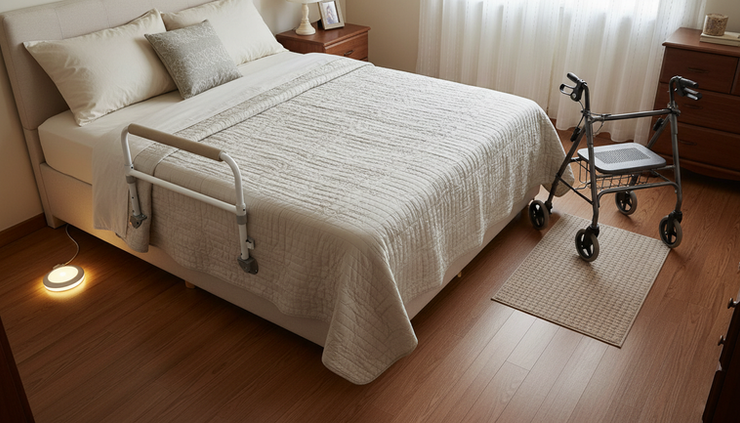
A motion-sensor night-light
Clear floor space beside the bed
A nonslip rug pad or no rug at all
A walker placed within safe reach
A bedside table that does not block the exit path
Small changes around the rail often make the whole setup safer.

How to place and use a bed rail safely
A safe bed rail aid should support a simple exit path. Placement should match the person’s strongest side, usual sleep position, and bathroom route.
For many seniors, the rail works best near the upper half of the mattress, close enough to help with sitting up but not so far down that it blocks the legs from swinging over the edge.
A typical safe movement looks like this:
Roll toward the rail.
Hold the rail with the nearest hand.
Push up with the other hand if able.
Bring the legs over the side of the bed.
Sit for a moment before standing.
Use the rail to steady the body while rising.
Pause before taking the first step.
That pause matters. Dizziness after lying down can happen, especially when getting up at night. Sitting at the edge for a few breaths gives the body time to adjust.
The rail should never be used to pull with sudden force. It is a support aid, not exercise equipment. If a person needs heavy lifting help, a different transfer device or caregiver assistance may be safer.
Common mistakes to avoid
A rail can look safe and still be poorly matched. These mistakes are easy to miss.
Using a rail that does not fit the mattress
Thick pillow-top mattresses, soft foam mattresses, and adjustable beds can affect rail stability. If the rail depends on mattress weight to stay in place, a light or shifting mattress can be a problem.
Placing the rail too close to the pillow
A rail near the head and neck area may create uncomfortable or unsafe gaps. It may also make it harder to roll naturally.
Blocking the normal exit point
A long rail that blocks the path out of bed can lead to climbing over it. That is unsafe. The bed exit should feel obvious and simple.
Ignoring changes in health
A rail that worked after a knee replacement may not be right later if balance, memory, or strength changes. Reassess the setup after falls, medication changes, hospital stays, or new mobility issues.
Skipping caregiver training
If a family member or caregiver helps with transfers, everyone should use the same method. Mixed habits can confuse the person using the rail and raise the risk of slips.
When a bed rail aid may not be enough
Sometimes a rail is only part of the answer. If getting out of bed is still unsafe, look at the full bedroom setup.
Other options may include:
Lowering or raising the bed height
Adding a firm mattress edge
Using a bedside commode
Placing grab bars in nearby areas
Using a transfer board
Keeping a walker at the correct angle
Working with a physical or occupational therapist
A very low bed can make standing hard. A very high bed can make feet dangle, which also increases risk. A good seated position allows both feet to rest flat on the floor before standing.
If falls have already happened, do not rely on a rail alone. A professional home safety assessment can identify issues that are not obvious, such as poor lighting, slippery flooring, or unsafe furniture placement.
A simple buying checklist
Before choosing a rail, use this checklist to narrow the options.
The rail matches the purpose
Choose sitting support, standing support, or edge protection based on the real need.
The rail fits the bed
Confirm mattress thickness, frame type, bed height, and adjustable bed compatibility.
The rail attaches securely
Look for straps, frame mounts, or floor supports that keep it from moving.
The grip feels comfortable
The handle should be easy to reach and hold, even at night.
The exit path stays clear
The rail should not block the legs, walker, wheelchair, or caregiver access.
The gaps are controlled
Check the spaces around the rail after installation and during regular use.
The person can use it safely
If confusion, impulsive movement, or severe weakness is present, get professional guidance before use.
The best rail aid is the one that fits real daily movement
Safe Bed Rail Aids for Seniors to Get In and Out of Bed Easily are most helpful when they solve a specific problem. A short handle may be perfect for someone who needs a steady grip to sit up. A floor-supported rail may be better for stronger transfer support. A longer rail may help with rolling concerns, but it must be fitted with extra care.
The right choice should feel stable, simple, and natural to use. It should make the path out of bed clearer, not more complicated.
Start with the person’s actual routine. Watch how they sit up, where they reach, how they stand, and what gets in the way. Then choose a rail that supports that movement safely. Recheck the setup often, keep the floor clear, and ask a health professional for help when needs change. A safer morning can begin with one steady handhold.


Comments